Unlock Your Baby's Secrets: Data-Driven Insights for Smarter Parenting
Data-driven parenting blends tracking (sleep, feeds, diapers, milestones) with your real-life observations to support calmer decisions in early parenthood—plus practical milestone examples and when to check in with your pediatrician.
⚠️ This article is for educational purposes and doesn't replace medical advice. If you're worried about your baby, call your pediatrician or emergency services.
Data-Driven Parenting (Without Losing Your Mind): A Practical Guide for Early Parenthood
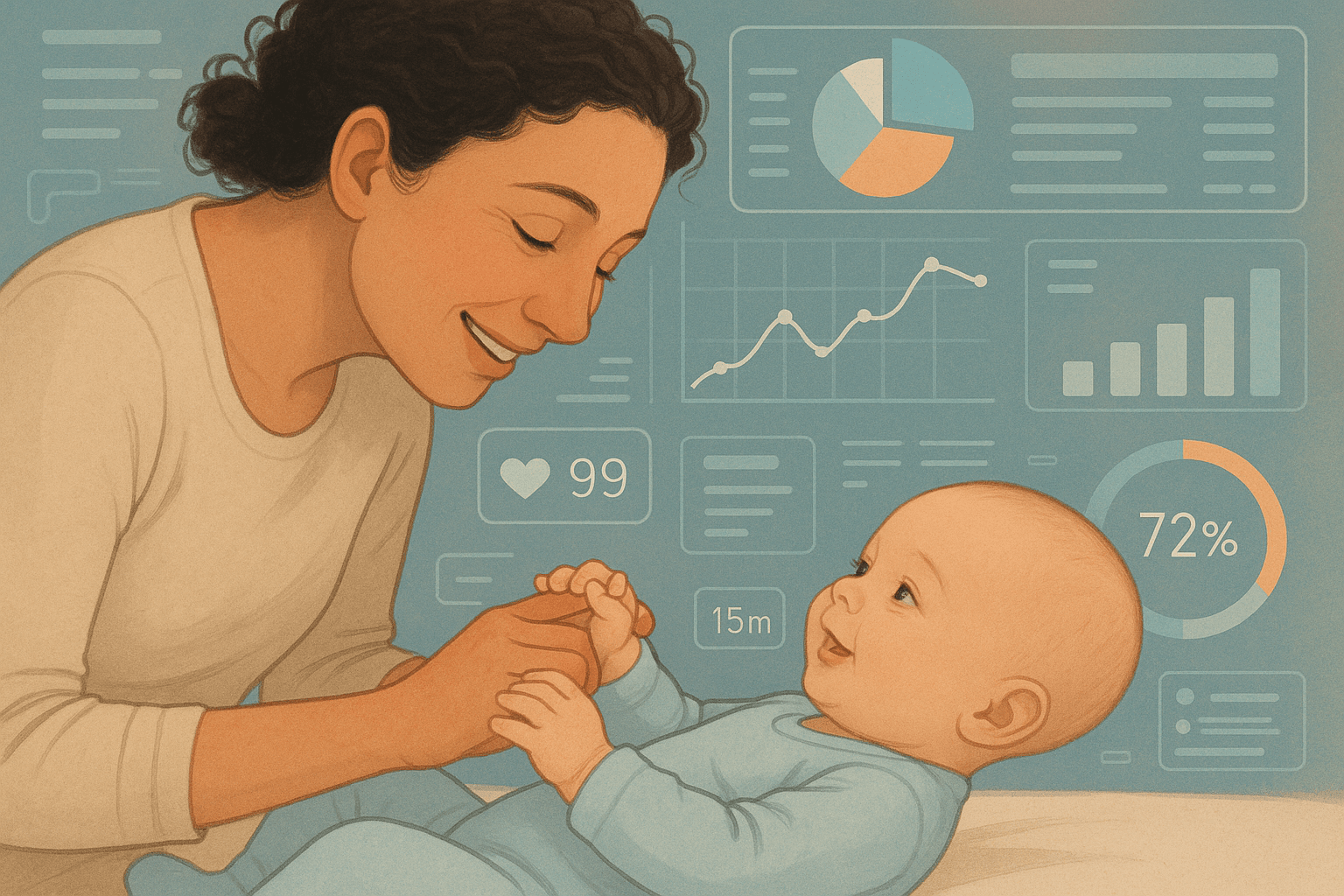
Data-driven parenting means using trusted information—plus your own observations—to make calmer, more confident choices. Think: tracking patterns (sleep, feeds, diapers, milestones) and pairing that with what you notice day-to-day.
In Cuddlydoo, the goal is simple: turn your baby’s real-life patterns into an easy view of what’s working, what’s changing, and what you may want to ask about at your next checkup.
Not medical advice; consult your pediatrician.
What “Data-Driven Parenting” Really Means
Data-driven parenting blends two types of info:
- Quantitative data: measurable things like sleep stretches, feeding frequency, diaper counts, or milestone timing.
- Qualitative insights: the story behind the numbers—your baby’s cues, temperament, family routines, and what you’re noticing.
The best decisions usually come from both.
Key Benefits: Why Tracking Can Help
1) Spot patterns you can’t see in the moment
Day-to-day life with a baby is a blur. Tracking can reveal:
- predictable hungry times
- sleep changes during growth spurts
- shifts in mood or soothing that line up with routine changes
2) Support milestone awareness—without comparison spirals
Month-by-month tracking can help you notice progress across:
- physical
- cognitive
- emotional
- social development
You’re not using data to “grade” your baby—you’re using it to notice trends and support development at your baby’s pace.
3) Bring clearer questions to well-child visits
Well-child visits often cover milestone checklists and growth. A simple record of what you’re seeing can help you ask focused questions and feel more prepared.
Infant Development Milestones to Watch (Examples)
Here are examples you shared that many parents track:
0–2 months
- social smiles around 6–8 weeks
- coos and gurgles
- eye-tracking faces or objects
3–6 months
- laughter
- babbling like “ba” or “da”
- turning toward voices
- focusing on moving objects
Signs you may want to discuss with a pediatrician
- no head control by 4 months
- no babbling by 6 months
- inability to sit by 9 months
Not medical advice; consult your pediatrician.
What to Track Month-by-Month (Simple, Useful Categories)
Tracking doesn’t need to be intense. Many parents focus on:
- Sleep: stretches, naps, night wakes
- Feeding: timing, quantity (if applicable), patterns
- Diapers: wet/dirty counts and changes
- Development & play: tummy time, reading, talking/singing, interactive play
These activities can support:
- neck/shoulder strength (tummy time)
- language (talking/singing, reading)
- bonding (interactive play)
Reliable Data Sources & Tools (From Your List)
If you like grounding decisions in reputable sources, here are the ones you mentioned:
- PeriStats (March of Dimes): week-by-week milestones and local stats (like preterm birth and C-section rates by county/hospital) for informed care choices.
- Apps like uGrow: personalized advice based on tracked sleep, feeding, and behavior.
- Evidence-based books:
- Expecting Better and Cribsheet (Emily Oster)
- The Scientist in the Crib
A good approach is to use research and tools as a flashlight, not a rulebook.
Common Knowledge Gaps (And Why Social-Emotional Tracking Matters)
You noted a few gaps that can surprise parents:
- 50% believe parental care affects development only after 6 months (you shared it starts at birth).
- 42% think babies feel sad/fearful only after 1 year (you shared it can be as early as 3–5 months).
Many parents feel most confident tracking physical milestones, but less sure about social-emotional support—so gentle check-ins on mood, soothing, and connection can be just as valuable as “numbers.”
Practical, Data-Smart Parenting Tips
Use data to ask better questions—not to self-judge
- If something feels off, your notes help you describe it clearly.
Research care choices when it’s helpful
- You shared an example of looking up hospital-specific procedure rates like C-sections.
Try a balanced “data + instincts” approach
- Numbers show trends.
- Your instincts catch nuance (like context, temperament, and what your baby is communicating).
Support development at home with repeatable routines
- tummy time
- reading
- safe toys
- responsive caregiving (watching and responding to cues)
How Cuddlydoo Fits In (Baby Tracker + Personalized Parenting Assistant)
Cuddlydoo is designed for early parenthood when you’re juggling a lot. Use it like a calm dashboard:
- track daily care (sleep, feeds, diapers)
- note milestone moments
- spot routine shifts and growth spurt patterns
- bring organized notes to well-child visits
The win isn’t “perfect tracking.” It’s feeling supported and informed.
Takeaway: Confident, Personalized Decisions
Data-driven parenting can help you feel grounded—especially when you combine:
- evidence-based info
- simple tracking
- your baby’s unique pace
- your own caregiver instincts
Not medical advice; consult your pediatrician.

Ready to Start Your Journey?
Join thousands of parents who trust Cuddlydoo to help them navigate the beautiful chaos of parenthood. Start your free journey today.